

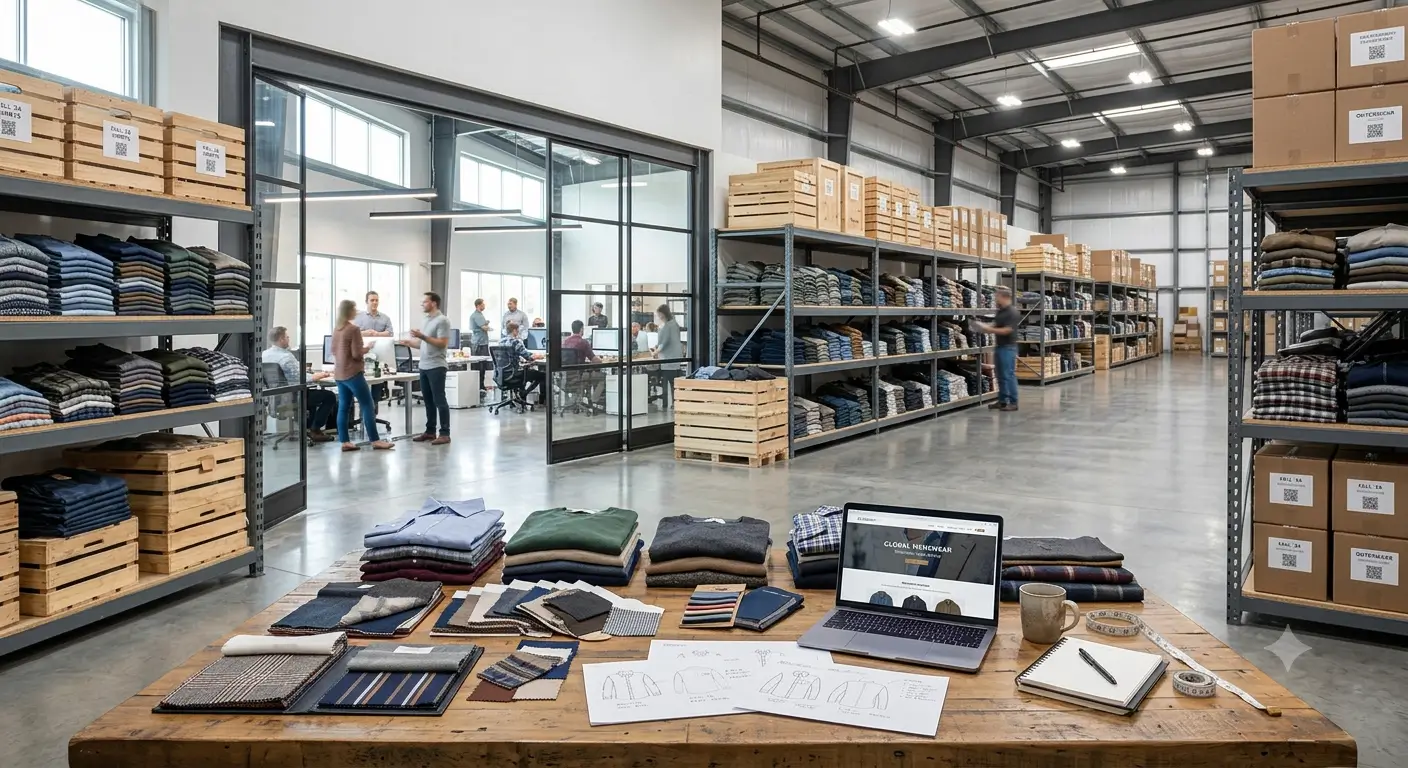
Navigating custom apparel manufacturing for menswear often feels like a high stakes poker game. You put significant capital and brand reputation on the line hoping your partner delivers. Selecting the right menswear wholesale manufacturers is not just about stitching fabric. It is about finding a strategic partner who understands your vision, scales with your ambition, and delivers consistent quality without the headaches.
I have seen too many businesses, from startups to corporations, stumble by picking the wrong production house. They focus on price alone or get swayed by glossy presentations. This is not a game for the faint of heart. With a clear strategy, you can cut through the noise and secure a partnership that works.
Beyond the Brochure: Scrutinizing Menswear Wholesale Manufacturers for Real Capability
Anyone can build a website and claim expertise. Reliable partners differ in their details, processes, and transparency. When evaluating menswear wholesale manufacturers, you are investing in a relationship and a supply chain.
Is their design and development process actually collaborative?
Many manufacturers treat design as a transactional hand off. You provide a tech pack and they provide a sample. Custom menswear, with its emphasis on fit and drape, demands true collaboration. Look for partners who offer insights on fabric selection and pattern adjustments. Do they have in house designers who refine ideas or simply execute instructions? A collaborative partner saves time and money by catching issues before they become costly production errors. In practice, most teams skip this step entirely and the results show it.
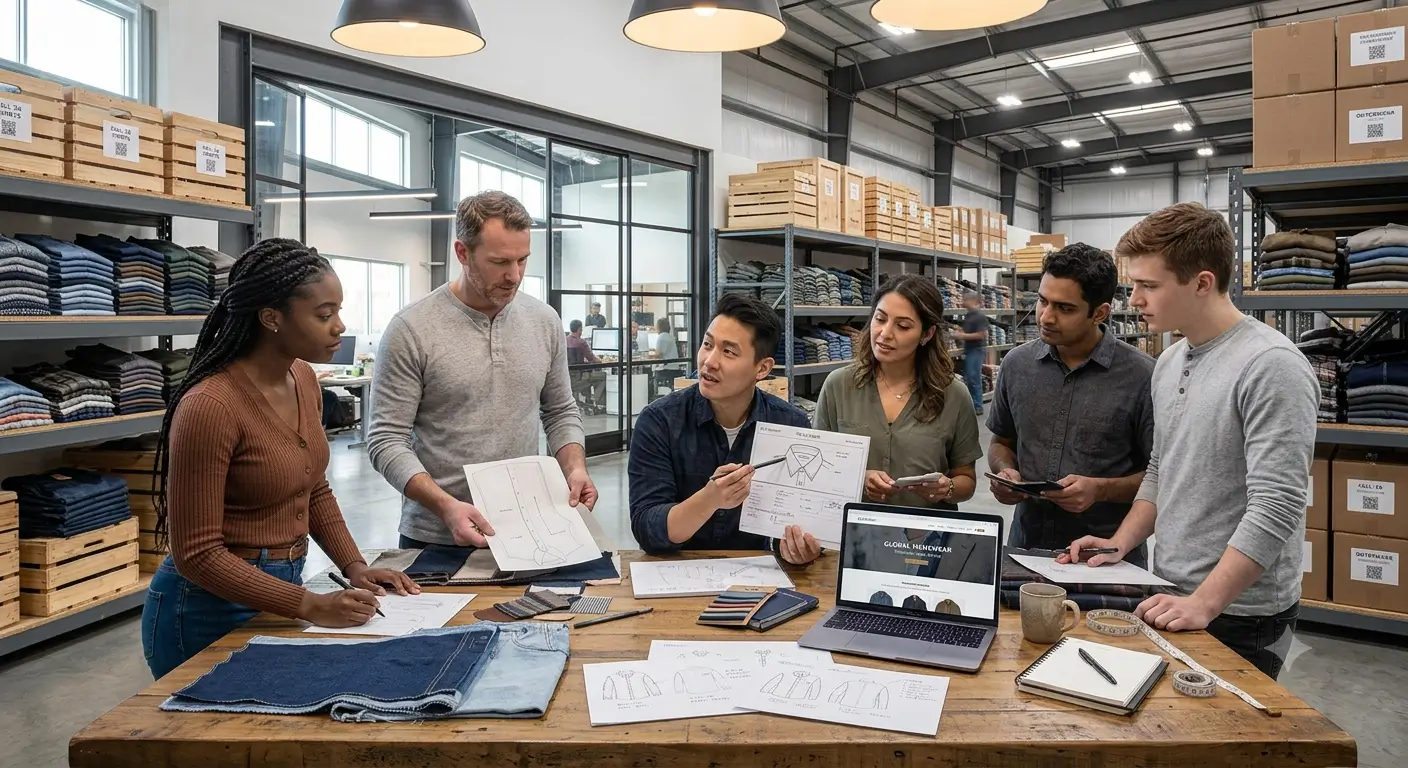
The best partnerships begin with a deep look into initial concepts. We share experience rather than just giving orders. For example, a fabric might look great on paper but have a shrinkage rate that makes it unsuitable for a structured blazer. A good manufacturer flags this upfront and suggests alternatives rather than producing a failing sample.
Can they handle your specific fabric and material sourcing needs?
Menswear relies on specific textiles like fine wools, high thread count cottons, and performance blends. A manufacturer’s sourcing network is critical. Ask if they have relationships with reputable mills or can source organic and recycled fabrics. Do not just accept a yes. Ask for examples of recent projects or current swatches.
Fabric choice is functional and critical to garment longevity. I have seen brands compromise on quality to cut costs only to face higher return rates. A reliable manufacturer guides you through options to balance quality, cost, and lead time. This is especially true for custom menswear production where fabric is paramount.
Once fabric and design direction are settled, the sample stage is where theory meets reality. A proto sample tells you whether the pattern actually works on a body, while a fit sample confirms sizing across your grade rules before you commit to bulk cutting. Do not skip rounds of revision here to save a week or two. Approving a sample too early is one of the most common reasons brands end up with an entire production run that fits poorly or hangs wrong, and by then the fix is far more expensive than another sample cycle would have been.
Navigating Production Realities: Minimum Order Quantities and Lead Times
Startups often hit a wall here. Running a production line for a few units is not feasible. Understanding Minimum Order Quantities (MOQs) and lead times is non negotiable.
What are their realistic MOQs, and are they flexible?
MOQs are driven by fabric minimums, cutting efficiency, and labor. If you are a startup, high MOQs can be a deal breaker. Some manufacturers are flexible if you commit to repeat orders. Others specialize in smaller runs, which cost more per unit but offer flexibility for testing the market. Look, it is not perfect. But it is the most practical workaround we have right now.
Understand the rationale behind the MOQ. Is it raw material acquisition or setup time for complex designs? Negotiating is not always possible, but understanding the reason helps you plan budgets. A slightly higher MOQ with a reputable manufacturer is often a better long term investment than a low MOQ with an inexperienced one.
How transparent are their lead times, and do they consistently meet them?
Lead times cover fabric arrival through final shipping. Vague promises like “around 8 to 12 weeks” are red flags. A credible manufacturer provides a detailed timeline for sampling, cutting, sewing, finishing, and quality control. Delays in custom apparel impact marketing schedules and cash flow.
Always build in a buffer. Even efficient operations face shipping delays or material imperfections. A manufacturer that communicates proactively is far more valuable than one that goes silent. This transparency is a hallmark of a trustworthy partner, and we detail our facilities clearly for every client.
Quality Control and Ethical Manufacturing: Non-Negotiables for Your Brand
Quality is about the entire production lifecycle. Ethical practices are now a requirement for brand reputation and consumer trust.
What does their quality control process actually entail?
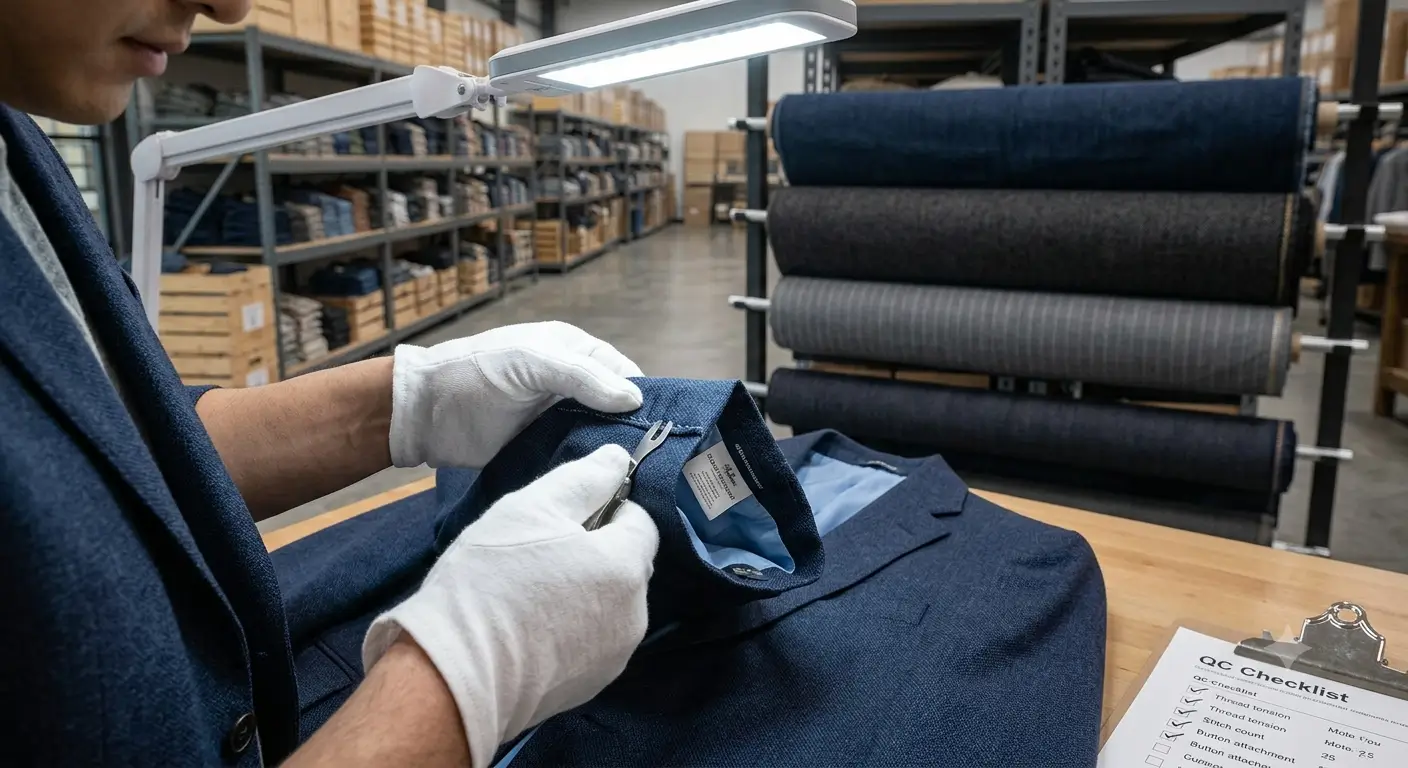
Ask for specifics. Do they inspect fabric upon arrival? Are there in line checks? What is the final inspection protocol? Do they use AQL standards? Request QC checklists or visit the factory. Substandard stitching or incorrect sizing can destroy credibility. For menswear, fit and finish are everything.
We use multi stage inspection protocols based on years of exporting custom apparel. Quality must be built in at every step, from pattern cutting to button attachment. This proactive approach minimizes defects and ensures the product meets exact specifications.
Are their ethical and sustainability claims verifiable?
Greenwashing is common. If a manufacturer claims to be sustainable, ask for proof. Look for GOTS, OEKO-TEX, or SA8000 certifications. Request third party audit reports. Transparency about labor and environmental impact is a business necessity. If they are vague or defensive, it is a major red flag.
The Logistics Labyrinth: Shipping, Communication, and Post-Production Support
The journey does not end when garments are made. Shipping and problem resolution can make or break a partnership.
How do they manage international shipping and customs?
Overseas logistics can be a minefield. Ask about their experience with customs documentation and freight forwarders. Do they offer DDP services to simplify imports? Unexpected fees can erode profit margins. A manufacturer with export experience minimizes these surprises.
Even with strict QC, occasional defects can slip through, so ask upfront how a manufacturer handles reorders or replacements when that happens. A dependable partner treats these as routine service, not a dispute, and resolves them quickly without finger pointing. This willingness to stand behind their own output, after the shipment has already left the factory, is often the clearest sign of a partnership built for the long run.
Clarify Incoterms. Are they quoting FOB, CIF, or EXW? Each has different implications for cost and risk. Do not assume anything. Our team handles international exports daily and knows that clear communication prevents most headaches.
What kind of communication and post-production support can you expect?
Communication is the bedrock of the partnership. Check response times and ask if they assign a dedicated account manager. You want a partner who is accountable after the invoice is paid. This sounds counterintuitive. But in competitive markets, it consistently works.
Post production support includes advice on care labels and reordering processes. A manufacturer invested in your long term success provides ongoing support to cement the partnership.
The Final Decision: Beyond Price, Towards Partnership
Choosing a manufacturer for custom menswear requires due diligence and clear communication. The cheapest option is rarely the best. Focus on value, which is the combination of quality, reliability, and ethics. A strong partnership protects your brand and helps your business thrive.
Take your time, ask hard questions, and trust your gut. Your brand deserves a partner invested in your success.
Ready to build a menswear line with a partner who prioritizes precision and quality? Explore how Jay Garments can transform your designs into exceptional custom apparel. Request a quote today to discuss your project with our expert team.
Frequently asked questions
What are the key factors in choosing a menswear wholesale manufacturer?
Key factors include design collaboration, fabric sourcing, realistic MOQs, transparent lead times, robust quality control, verifiable ethical practices, and reliable logistics.
How important are MOQs when selecting a custom apparel manufacturer?
MOQs are vital as they dictate the minimum units per design. High MOQs can challenge startups, so find a manufacturer whose volumes align with your budget. Some offer flexibility for long term partners.
How can I verify a manufacturer’s quality control standards?
Ask for detailed QC descriptions, including fabric inspection and in line checks. Request checklists, inquire about AQL standards, and consider factory visits or third party audits.
What’s the difference between FOB and DDP in shipping terms?
FOB means the seller is responsible until goods are loaded onto the vessel. DDP means the seller handles all costs and risks, including customs duties, until delivery to the buyer.
Should I prioritize price or quality when choosing a manufacturer for custom menswear?
Prioritizing quality and reliability is a better long term strategy. Compromising on quality leads to higher returns and damaged reputations. Seek a balance where quality aligns with a fair price.